Taxonomic Classification and Distinctiveness
The Cyprus cedar (Cedrus brevifolia (Hook.f.) A.Henry) is a gymnosperm belonging to the family Pinaceae. First observed scientifically in the modern era during British colonial surveys, it was formally described by Sir Joseph Dalton Hooker in 1879. While some taxonomists historically considered it a subspecies or ecological race of the Lebanon cedar (Cedrus libani subsp. brevifolia), modern phylogenetic, anatomical, and molecular analyses (including needle terpene profiling and chloroplast microsatellite mapping) confirm its evolutionary independence and status as an absolute island endemic.
Needle Structure & Foliar Dimorphism
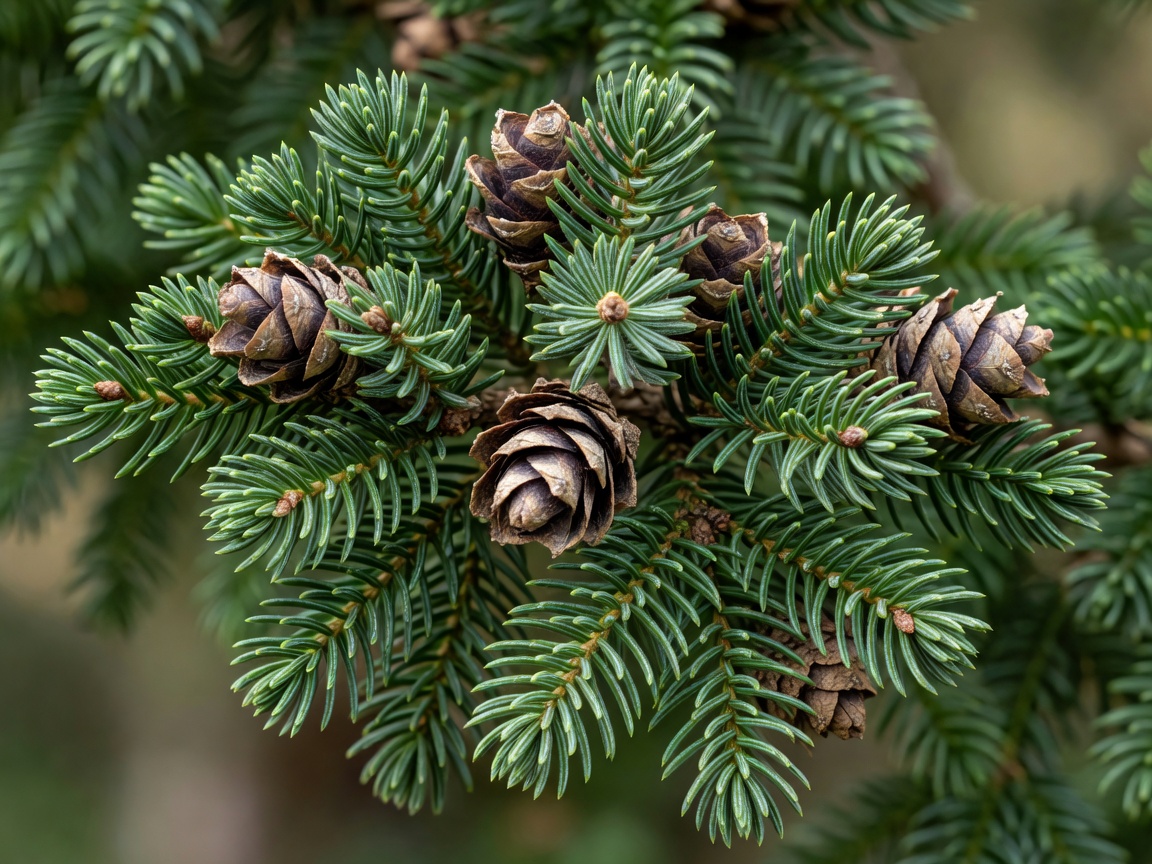
The foliage of Cedrus brevifolia exhibits pronounced dimorphism, organized into long shoots (whip shoots) and short shoots (spur shoots):
- Long Shoots: Lead branches produce solitary needles arranged spirally along the stem. These needles are typically greener, slightly more pliable, and aid in branch elongation.
- Spur Shoots: Sluggish, compact lateral buds generate dense rosettes containing between 20 and 35 needles radiating symmetrically. This arrangement creates dense, brush-like clusters that optimize light capture in rugged mountain ravines.
- Stomatal Bands: Both the dorsal and ventral needle surfaces exhibit glaucous whitish stomatal bands. These micro-pores are sunken beneath a dense epicuticular wax layer, limiting transpiration in low-humidity Mediterranean summer conditions.
Branch Architecture and Mature Crown Shape
The growth habit reflects a slow, century-long ontogenetic transformation:
Juvenile Form (0–40 Years): Young trees display an upright, symmetric, pyramidal crown with ascending boughs and a distinct central leader. The trunk is slender, clothed in smooth, silvery-ash bark with small resin vesicles.
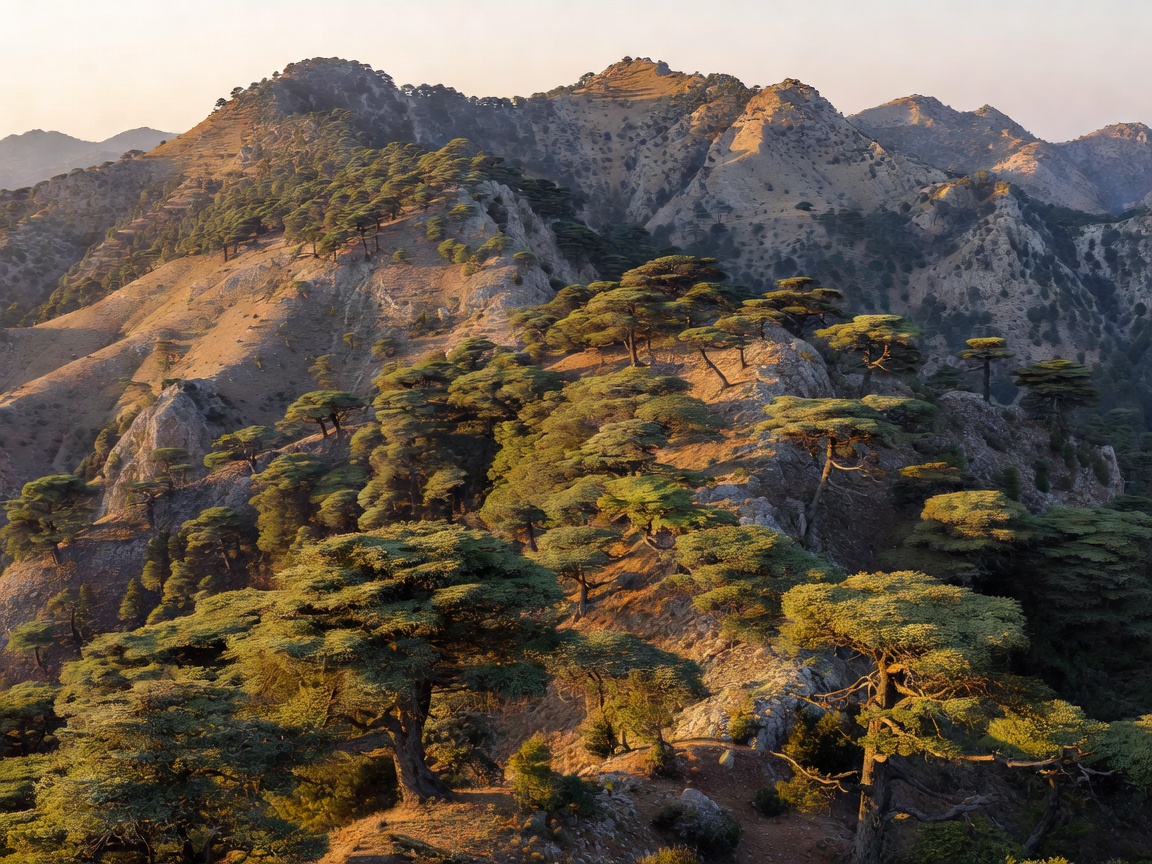
Mature Form (80–500+ Years): As the tree reaches the subalpine canopy, the central leader loses apical dominance. The primary scaffold boughs extend horizontally in broad tiers, developing a majestic, flat-topped (tabular) or umbrella-shaped crown. This tabular architecture allows the branches to flex without snapping under heavy, wet winter snowfalls common in the upper elevations of the Troodos range.
Cone Biology, Pollination, and Seed Dispersal
Cedrus brevifolia is monoecious, bearing both male pollen cones and female seed cones on different branches of the same individual:
- Male Catkins (Staminate Cones): Appear in late summer (August–September) on the lower branches. They are solitary, erect, cylindrical, 3 to 5 cm long, and release copious pale yellow pollen carried by thermal updrafts during late September and October.
- Female Cones (Seed Cones): Develop erect on the upper branches. When fertilized, they require 17 to 20 months to complete maturation. Mature seed cones are barrel-shaped, resinous, 7 to 10 cm in length, with an obtuse or slightly depressed apex.
- Cone Dehiscence: Unlike pine cones, cedar cones do not fall intact. Between November and January, mature cones break apart directly on the branches; individual cone scales detach, liberating the seeds and leaving an upright woody rachis (central spindle) that persists on the tree for years.
- Winged Seeds: Seeds are triangular, 5 to 7 mm long, equipped with a delicate, broad, translucent membranous wing (15 to 20 mm long) containing small resin pockets. Wind currents across the steep Troodos ravines distribute the seeds across scree slopes.
Bark Morphology & Fire Defenses
Mature bark is thick, corky, and deeply furrowed into irregular quadrangular plates. The color shifts from silvery-grey in adolescent trees to dark charcoal-grey or reddish-brown in ancient veterans. The fibrous composition and accumulated cork layers protect the vascular cambium from thermal shock caused by fast-moving understory fires fueled by low-growing Mediterranean scrub.
Cyprus Cedar vs. Lebanon Cedar
While sharing common ancestral lineages from the Tertiary period, Cedrus brevifolia exhibits slower radial growth, half the needle length, smaller seed cones, and superior physiological tolerance to ultramafic soils and intense summer drought.